

Survey: Leading Universities Signal Shift Toward Data-Informed Space Management
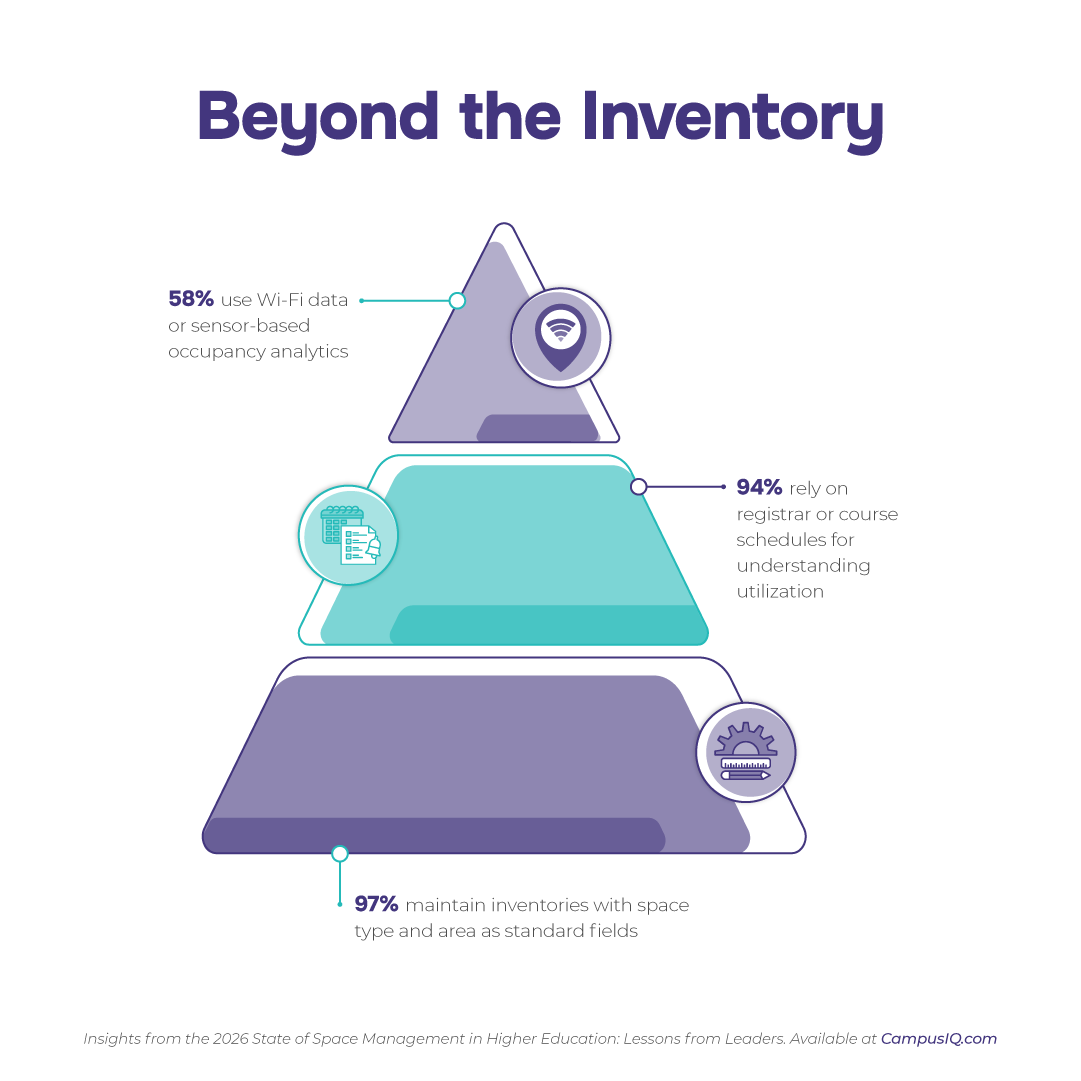
97% continue to maintain inventories while 58% also use Wi-Fi data or sensor-based occupancy analytics
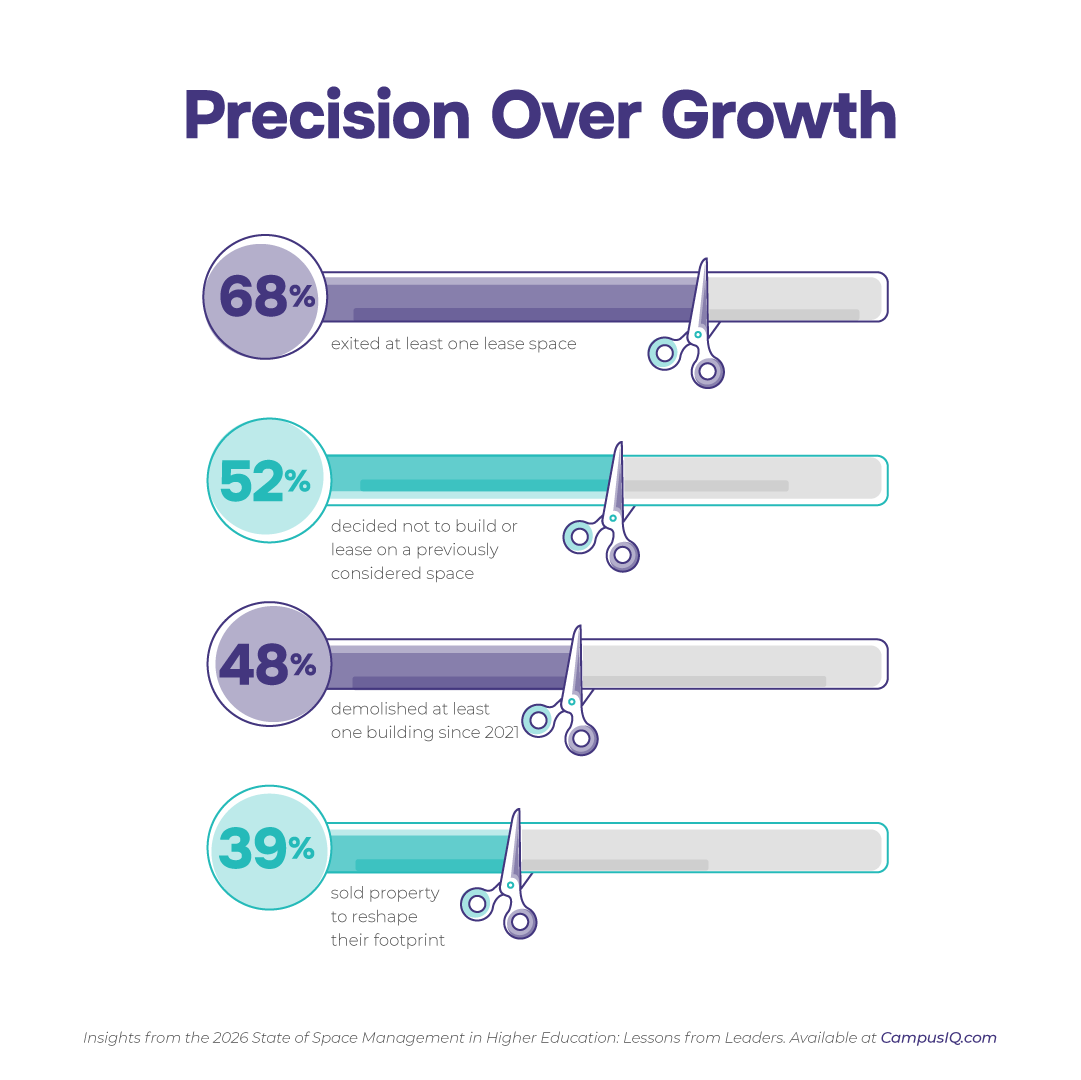
Higher ed leaders are showing that 68% have exited at least one lease space while 52% decided not to build or lease on a previously considered space.
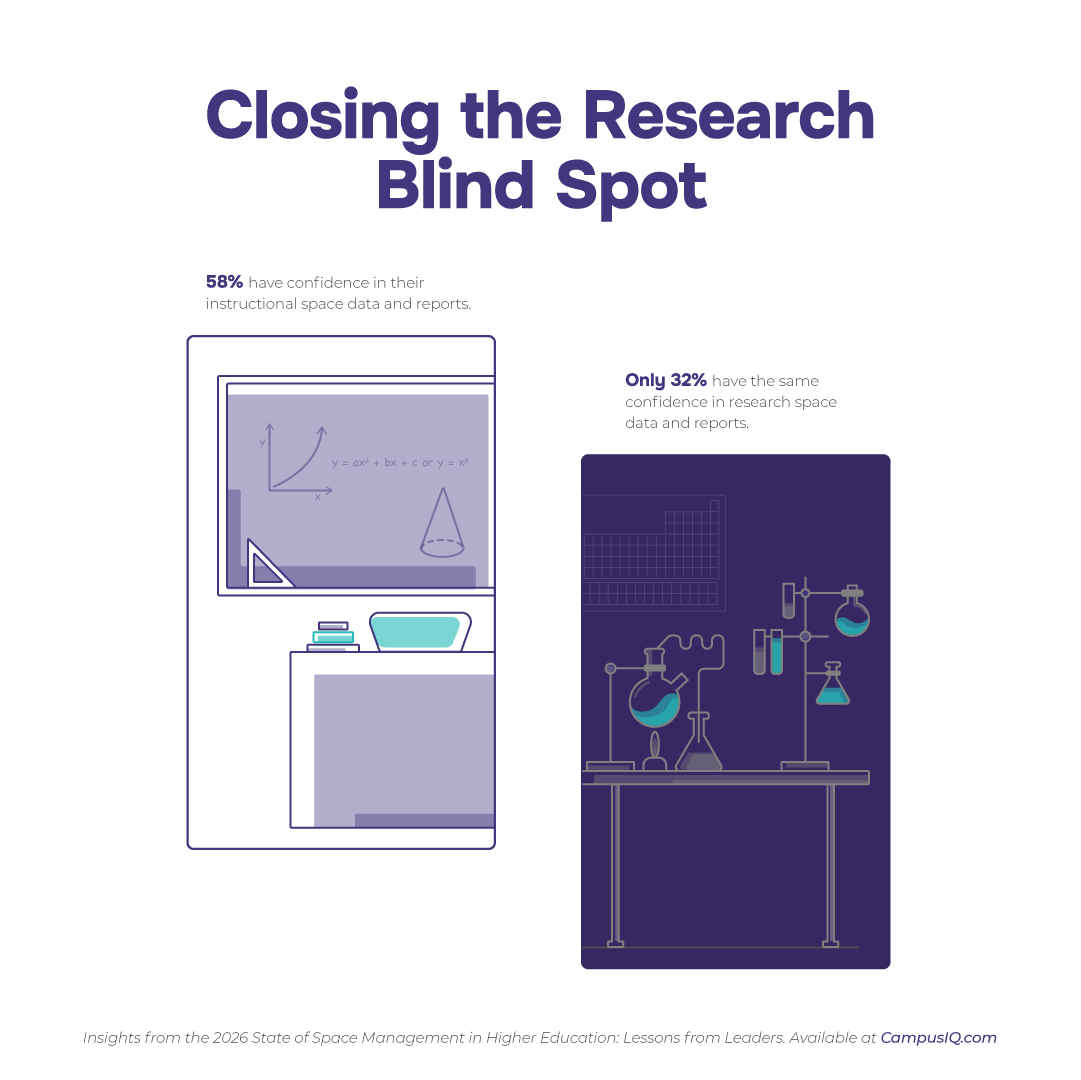
Closing the Research Blind Spot - how higher ed leaders are approaching data needs around research space to make smarter decisions.
Joint report from CampusIQ and Huron identifies five key shifts as higher education modernizes how it plans, allocates, and optimizes campus space
The 2026 State of Space Management in Higher Education: Lessons from Leaders, a joint report from CampusIQ and Huron, surveyed some of the sector's most complex institutions—74% manage over 5 million gross square feet, and over 70% are classified as R1 or R2 research universities. Among the findings: 68% have exited at least one lease since 2021, 52% have made deliberate decisions not to build or lease previously planned space, and 39% now use Wi-Fi analytics to understand occupancy patterns.
The report identifies five areas where leading institutions are evolving their practices: aligning hybrid work policies with physical space standards, moving from scheduled to actual utilization data, taking a precision approach to portfolio management, strengthening data-informed governance, and extending analytical rigor to research facilities.
Aligning Hybrid Policies with Physical Space
The survey found that 90% of responding institutions have implemented flexible or remote work policies. Now, leading institutions are working to align their space allocation practices accordingly. Currently, 26% have updated their guidelines to link on-campus presence to workspace assignments—an emerging best practice that others are beginning to adopt.
“We’re seeing a real maturation in how universities think about space,” said Aaron Benz, Founder and CEO of CampusIQ. “Hybrid work policies are now common; the harder next step is right-sizing the footprint to match how people actually work—over time and within real budget constraints.”
From Schedules to Real-Time Occupancy Data
Leading institutions are moving beyond static schedules to understand how spaces are actually used. While 94% currently rely on registrar or course schedules for utilization insights, a growing number are adopting more sophisticated approaches: 39% now use Wi-Fi analytics and 19% have implemented sensor-based occupancy analytics. With 97% maintaining structured inventories as a foundation, these institutions are well-positioned to layer in real-time data.
Strategic Portfolio Optimization
Perhaps most notably, leading institutions are taking a more strategic approach to their real estate portfolios—making deliberate decisions about which spaces serve their mission and which do not. Since 2021, 68% have strategically exited at least one lease, 52% have made informed decisions not to build or lease space that was previously under consideration, 48% have demolished underperforming buildings, and 39% have sold property to reshape their footprint.
“As we confront a new era of complexity, leading universities are grounding space decisions in real utilization insights—guiding capital choices, strengthening stewardship, and ensuring every square foot advances the mission.” said Andrew Sama, Higher Education Director at Huron. “We are entering a structural shift in how institutions manage their physical footprint, where growth is no longer the default response to space needs. With the right data, clear policies, and disciplined decision‑making, space management can move from reactive oversight to strategic leadership and these survey results indicate that this shift is already underway.”
Extending Analytics to Research Facilities
Having established strong practices for instructional space—58% express confidence in their classroom data and reporting—leading institutions are now turning attention to research facilities. Currently, 32% report similar confidence for research space, with 10% regularly calculating research dollar density (funding per square foot). This represents the next frontier for space analytics adoption.
Strengthening Data-Informed Governance
Institutions have built the structural foundation for effective space governance: 78% describe centralized governance models and 90% have designated space management roles. The next phase of maturity involves connecting these structures to shared data. Leaders recognize this opportunity—and are working to transform governance from an administrative function into a strategic lever for decision-making.
"What we're seeing is higher education stepping into a new era of space stewardship," added Benz. "The institutions in this survey are showing what's possible when you pair strong governance structures with real utilization data. They're not just managing space—they're optimizing it for their mission."
About the Survey
The 2026 State of Space Management Report was fielded during the fall of 2025 and reflects responses from 31 higher education institutions across North America. Over 70% of participants are Doctoral Universities with High or Very High Research Activity (R1 and R2), and the cohort includes 22 public and 9 private institutions. The full report is available at www.CampusIQ.com.
About CampusIQ
CampusIQ is the leading provider of space occupancy and space intelligence solutions purpose-built for higher education. Serving over 50 institutions and more than 1 million students, CampusIQ helps facilities leaders and campus planners turn real-time data into smarter decisions. The platform has analyzed over 225 million square feet of campus space and maintains a 100% customer renewal rate. Learn more at www.CampusIQ.com.
CONTACT:
Veena Vadgama
CMO, CampusIQ
veena.vadgama@campusiq.com
612-865-9393
Allie Bovis
Director, Communications, Huron
abovis@hcg.com
SOURCE: CampusIQ and Huron
Veena Vadgama
CampusIQ
+1 612-865-9393
email us here
Visit us on social media:
LinkedIn
YouTube
X
Other
Why Are Universities Exiting Leases and Demolishing Buildings? With CampusIQ and Huron.
Legal Disclaimer:
EIN Presswire provides this news content "as is" without warranty of any kind. We do not accept any responsibility or liability for the accuracy, content, images, videos, licenses, completeness, legality, or reliability of the information contained in this article. If you have any complaints or copyright issues related to this article, kindly contact the author above.
