

Advances in Scale-Invariant 3D Face Recognition: A CGH–Mellin Integrated Approach
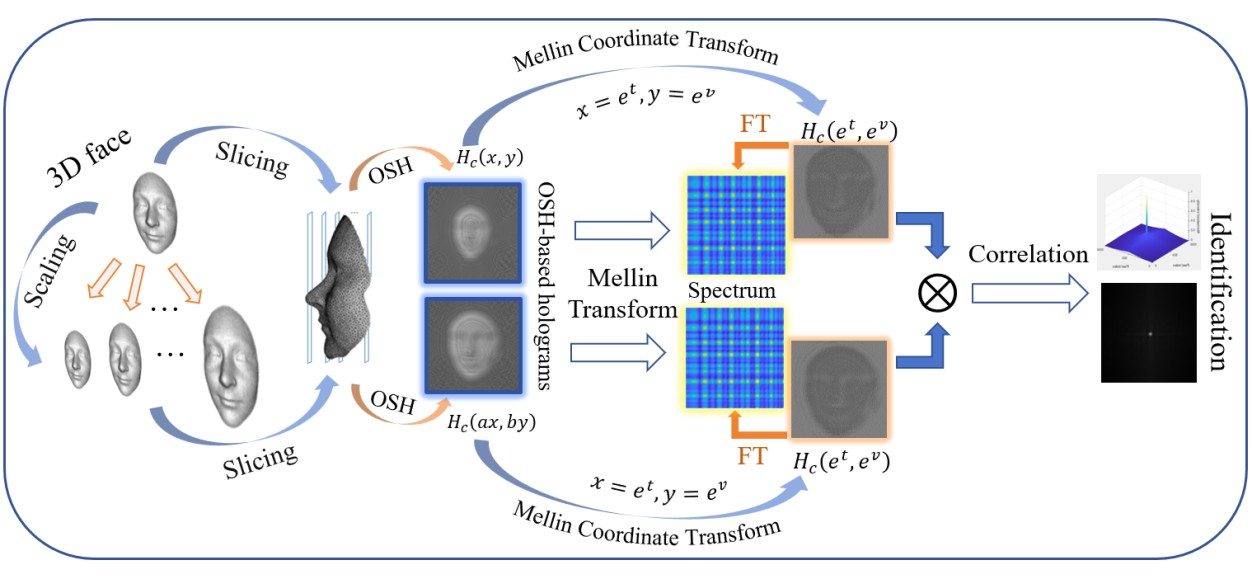
Fig. 1 Overall block diagram of scale-invariant 3D face recognition
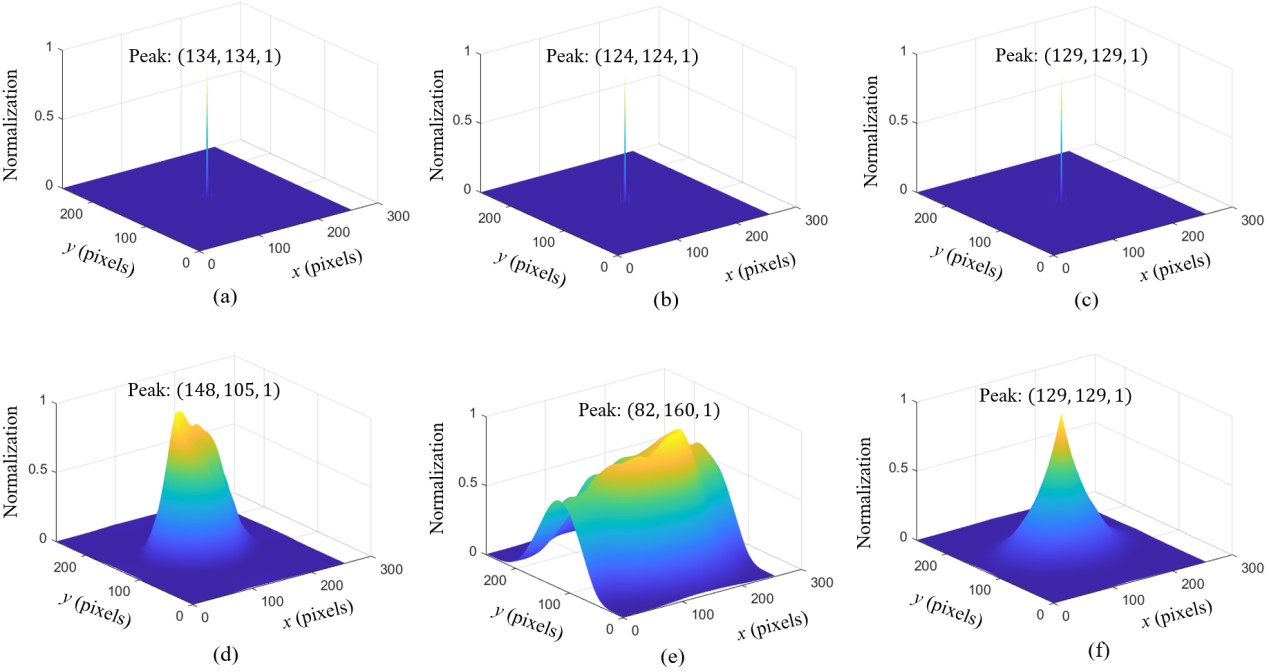
Fig. 2 Comparison of OSH-based Holograms correlation results with and without Mellin Transform at different scale factors for the same 3D face model Sophie. (a) Normalized correlation results with Mellin transform at scale factors a=b=0.5.
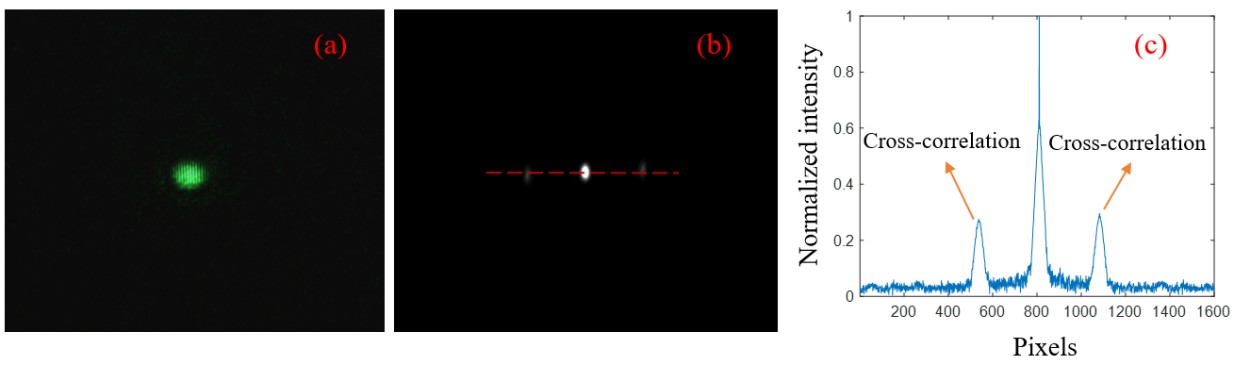
Fig. 3 Results of arbitrary cross-scale holographic correlation matching experiments. (a) JTS intensity patterns detected by camera corresponding to the joint input with scale factors 1.5× vs. 2.0×. (b) FFT output of Fig. 3(a).
We present a novel method for scale-invariant 3D face recognition by integrating computer-generated holography with the Mellin transform.
CHINA, December 5, 2025 /EINPresswire.com/ -- With the rapid rise of artificial intelligence and growing demands for information security, face recognition technology—particularly 3D face recognition has become a major research focus in the field of biometrics. Compared with traditional 2D methods, 3D face recognition captures depth and geometric structure, delivering higher accuracy and robustness under varying lighting conditions, facial expressions, and camera angles. However, a key obstacle to real-world deployment is scale variation: when the distance between a subject and the imaging device changes, the apparent size of the face in the captured image also changes, which can significantly degrade system stability and recognition accuracy.In recent years, researchers have developed multiple 3D face recognition strategies. Keypoint-based and local feature methods extract descriptors such as curvature, texture, or point clouds, but these are inherently sensitive to scale and require extra normalization steps, which add computational complexity. Geometric modeling approaches, such as triangle similarity comparison, achieve scale invariance but oversimplify the 3D data, losing holistic facial information. Deep learning methods leverage large training datasets and neural networks to gain some degree of robustness, yet they depend heavily on computing resources and extensive data, limiting generalization and interpretability.
The Mellin transform, a mathematical integral transform, is a powerful tool for handling scale-invariance by converting scale changes into shifts. At the same time, holography can record and reconstruct the full wavefront of a 3D object, enabling faithful representation of 3D facial data on a 2D medium. The advent of computer-generated holography (CGH) has made it possible to perform this process entirely through computation. Previous studies have applied CGH to 3D face recognition, converting 3D feature points into holograms and using digital correlation for matching, but work explicitly addressing scale invariance has been lacking.
Recently, Professor Yaping Zhang and her team at the Yunnan Provincial Key Laboratory of Modern Information Optics, Kunming University of Science and Technology, proposed an innovative approach that integrates computer-generated holography (CGH) with the Mellin transform to achieve scale-invariant 3D face recognition. In this method, 3D facial mesh data are encoded into holograms based on the layered concept of optical scanning holography (OSH) and then transformed in the Mellin domain, constructing a robust recognition framework that maintains stable performance even under scale variations ranging from 0.4× to 2.0×. This research was published in Opto-Electronic Advances 2025 Early View section under the title “Scale-invariant 3D face recognition using computer-generated holograms and the Mellin transform.” The work was co-authored by Prof. Xianfeng Gu (Stony Brook University, USA), Prof. Daping Chu (University of Cambridge, UK), and Prof. Ting-Chung Poon (Virginia Tech, USA).
Experimental results demonstrate that the system consistently produces sharp and distinct correlation peaks under scale changes, with a peak-to-noise ratio (PNR, log₁₀) of about 4.5, significantly outperforming baseline methods without scale normalization. In addition to large-scale numerical simulations, the team built a hybrid optical–digital joint transform correlation platform using a spatial light modulator (SLM), Fourier lens, and high-speed camera to realize real-time optical correlation, validating both the feasibility and effectiveness of the proposed approach.
This technology shows strong potential for security access control, long-range identity verification, and mobile contactless recognition, helping reduce errors caused by distance or zoom variations, lowering false rejection and false acceptance rates, and enabling efficient flow management in smart campuses, airports, and railway stations. Future work aims to extend the method to multimodal 3D biometrics such as fingerprints, palmprints, and iris recognition, and to integrate it with deep learning techniques, combining physical modeling with data-driven approaches to further improve accuracy and generalization.
Research Team Introduction:
The Yunnan Provincial Key Laboratory of Modern Information Optics at Kunming University of Science and Technology focuses on information optics, element-based algorithms for computational holography, optical scanning holography (OSH), the preparation and characterization of photopolymers, as well as color/polarization holography and 3D display. The team currently has five core members. Over the past five years, they have led more than a dozen projects funded by the National Natural Science Foundation of China and at the provincial/ministerial level; published over 50 SCI/EI-indexed papers; secured more than 20 invention patents; and completed six technology transfers. The team has received the Yunnan Science and Technology Award (Second Prize in Natural Science) and university-level teaching achievement awards for both undergraduate and graduate education. They have published nine monographs and textbooks, including Modern Information Optics with MATLAB—and deliver nationally and provincially recognized first-class courses. Committed to serving the agendas of “Digital Yunnan” and “Digital China,” the team targets original breakthroughs and engineering translation in high-performance 3D information acquisition and optical information processing.
Read the full article here: https://www.oejournal.org/oea/article/doi/10.29026/oea.2025.250095
Andrew Smith
Charlesworth Publishing Limited
+44 7753 374162
marketing@charlesworth-group.com
Legal Disclaimer:
EIN Presswire provides this news content "as is" without warranty of any kind. We do not accept any responsibility or liability for the accuracy, content, images, videos, licenses, completeness, legality, or reliability of the information contained in this article. If you have any complaints or copyright issues related to this article, kindly contact the author above.
